Blue Hour, Sonic Cartography 02/09/2012
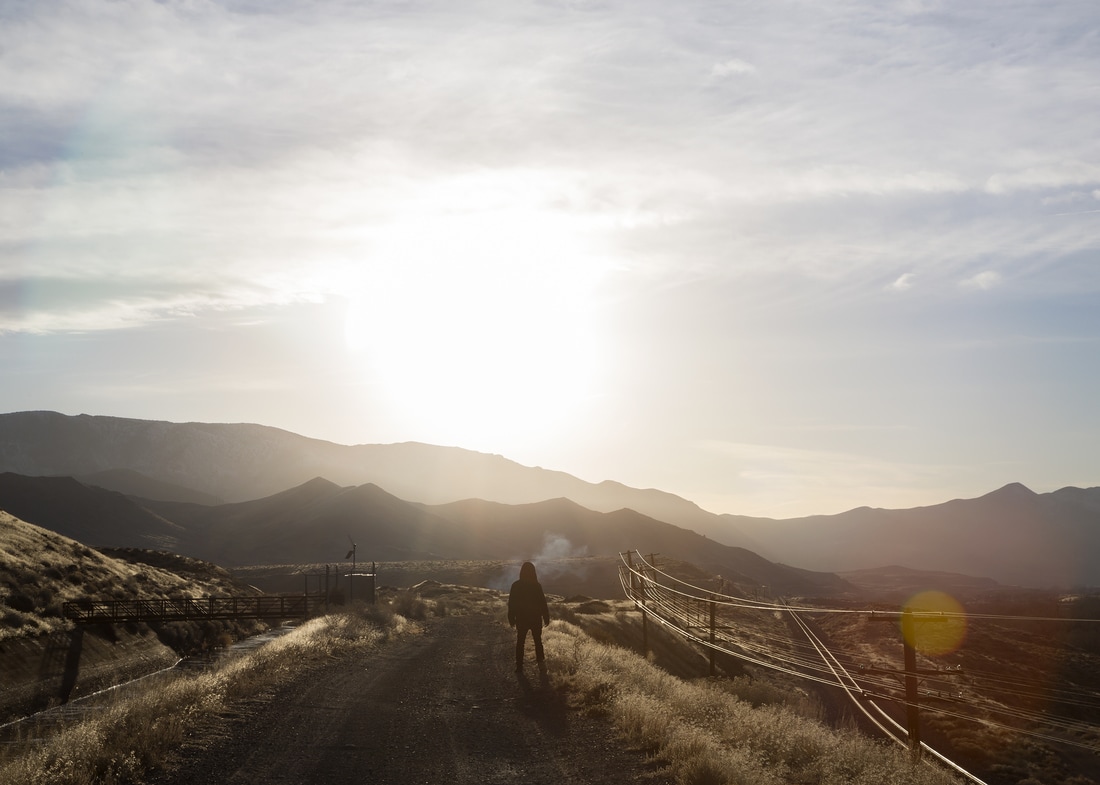
Last year I began presenting the second in a series of pieces based around sunrise and sunset that eventually evolved into the Sunset + Music tour, and opportunities to present the event at a few festivals arose as well. One of the places I presented it was in Los Angeles and sound artist Chris Kallmyer attended the event and wrote an amazing article for NewMusicBox that uses my Sunset + Music event as a jumping off point into the larger themes of space, place, and perception. Make sure to check out the article on the NewMusicBox website. Composer Scott Comanzo attended the initial New York City event, and has since commissioned me to do another time and iPod based piece for his Private Works festival. This new work, which I've been working on for about 3 months, is entitled Blue Hour. Participants will download the music onto their personal listening device and show up to a predetermined and west-facing location. At sunset the cue will be given to press play, and participants will sit back and listen while observing. The music will continue on for around 45 minutes, deep into twilight. The music, which is similar to these other time-specific pieces sonically, is also composed in the same way in that it utilizes both new and preexisting works as well as field recordings to best complement the changing of light at the pivotal moment beginning at sunset until dark. Blue Hour will be presented in Hartford for the aforementioned festival on April 28th, and it will also be presented in New York, Seattle, Los Angeles and other cities on different days throughout 2012. Add Comment Memory, Senses, Interaction, Reaction. 01/26/2012
Last week I was fortunate enough to travel down to LA for some musical tourism based around Bang on a Can and Red Fish Blue Fish playing Steve Reich’s seminal minimalist masterpiece Music for 18 Musicians. This piece of music is embedded and intertwined with numerous memories both visceral and literal, so being able to hear this work in a live setting had a powerful effect on me that was filled with sometimes unexpected reactions and new realizations about the structure and forms explored in the work, and how pieces of music such as this can be reproduced in a live setting. Some of the memories are so caliginous that I don’t even know when they actually occurred or whether my mind merely associates the memorable motives from the piece with particular feelings, types of weather, or shades of light. For example, I get memories of shimmering tree-mottled late-afternoon sunlight rolling through my mind when I hear some sections, but on the other hand on days of the aforementioned variety when I’m out and about I’ll suddenly realize that the long slow shifting lines that help create and shift the sense of time for the listener have arisen in my mind as I’m spacing out looking at a column of trees moving slowly in the breeze. Then there are moments like driving across the desert in Utah when I listened to the work and those are mixed into the collective memory and association as well. When I finally was able to hear Music for 18 Musicians on January 18th, the concomitant memories streamed back through my mind concurrently with the changing sections and, combined with the compelling performances on stage, I experienced intense and almost hallucinatory physical reactions that ranged from frequent tears to a general sense of warmth wrapping around me to pressure in my chest. Other times the music seemed to be passing over me in waves as I was frozen in place, arrested with sensation. The combination of ten or fifteen years’ worth of memories with this piece, feeling a bit vulnerable in the friendly but foreign city of Los Angeles, and the extraordinary performance happening before me were what brought on this specific reaction (while simultaneously adding to the collection as well), and yet the experience itself seemed entirely singular at the time - not just another in a long line of vastly interconnected moments. Memory, as tangible as it seems sometimes, is, of course, in constant flux - often shaped in our own minds by creating and re-contextualizing for new circumstances we encounter as our lives change or to create a sort of mythology surrounding our experiences as we share them publicly. These self-mythologies have the possibility to shape how others perceive us, and how we interact with the world. Such mythologies abound in the music world. La Monte Young is surely bound up so intricately with creating his own mythology that at some point he became his own mythology, and continued to make work from this new self-created figurehead position that in turn perpetuates his own ever-unfolding self-mythologizing. “A consistent autobiographical trope emerges as one examines La Monte Young’s life and his music,” writes Jeremy Grimshaw in his book on Young, Draw a Straight Line and Follow It, “over and over again, he connects his profoundest musical inspirations as an adult with seemingly banal sonic memories from his childhood: wind, machine, crickets, power poles.” And, on the other end of the musical spectrum, groups like the Wu-Tang Clan have from the start been involved in creating while continuously being involved and interacting with their own self-mythology initially through lyrics, but quickly thereafter clothing lines, Wu-Tang headphones and other goods, as well as a record label spawning dozens of other artists who uphold or at least reinforce the notion of the ever-unfolding new ‘chapters’ in Wu-Tang history - fictional or otherwise. By drawing endless inspiration from Chinese Zen and martial arts history, they draw connecting lines that they use as metaphors for their own struggle leaving the difficult circumstances growing up in Staten Island (Shaolin) to drawing together and exiting to become a force of change (Wu-Tang), and thus the self-perpetuating mythology and collective memory are wrapped up in each other with both sides gaining legitimate credo by employing the historical precedent already set by the story of Kung-Fu. When considering these concepts of memory, perception and change, we must consider that the senses are always at work as well, and the way our senses form our concepts of memory and effect every one's interactions are ever-present and culture-specific. And, the interpretations of what those memories mean no matter what the sense are specific to one’s own experiences as well. For instance, while in LA for the aforementioned performance I was having a meeting with Christopher Roundtree and Chris Kallmyer of wild Up when for whatever reason I was struck by this memory of eating a rack of ribs at a small (but touristy and famous) BBQ joint in Kansas City which I’ve carried with me for going on three years now. Every so often I’ll sit back and get lost in thinking about eating that rack of ribs. The memory is so incredibly and embarrassingly carnal and stereotypically American that I can hardly bare it, but Chris (Kallmyer) immediately chimed in that he felt that if an animal had been treated right in its life and that in preparation the meat was treated with respect that the taste, experience and subsequent enduring memory could be profound. This idea makes perfect sense, and yet I never would’ve perceived this recurring memory like that, card-carrying-conscious-NW-eater that I am. Still, my own experiences had taken me in a different direction. And, even our own sense of vision which seems so incredibly straightforward has great impact on our world view, collective understanding, and memory creation. Robert Desjarlais, author of Sensory Biographies, notes that for the Yolma wa of Nepal (a small ethnic minority), seeing is perceived in as many as 27 different ways. Complexity and diversity are the norm concerning these matters no matter your cultural circumstance. And yet, where does all this lead within the context of composing for me personally? We are all influenced collectively by all the music we’ve ever heard or encounter and choose to emulate, and beyond that our own experiences dictate what some of us consider to be music worthy of influence, music at all, and what should be incorporated into our collective oeuvre and micro-movement incestuous cannon that we inhabit. As of late I’ve realized that the longer I live two blocks from some ship yards here in Seattle, the more I can readily distinguish the various boats and what it is they may be up to, that there are daily, weekly and even seasonal patterns to the different ships horns being sounded, trains wailing in the distance, and trees being whipped around by the wind so close to the water. These sounds seem to have increasingly made their way into my pieces whether by way of field recording or, more frequently, by abstraction. The boats sounding their horns in the distance has transferred readily to Conch shells being played in parking garages and being written into pieces for winds, but bamboo groves rustling have been written very literally into percussion ensemble works. All of these sounds and memories intermingle, while my collective experience filters how I hear sounds and decide to use them. Sometimes it feels as though I’m in charge of what I’m deciding to write, and other times Indra’s net seems too vast to think that I’m actually doing anything at all besides just being; existing as merely a collection of experiences. _ Sunset + Music at ONN/OF Festival in Seattle 01/24/2012
This Saturday my Sunset + Music event will be included in the ONN/OF festival here in Seattle. People should meet outside the festival venue (The Sweater Factory in Ballard) at 4:45 to participate in this time-specific music event based around sunset. Participants should download the piece onto their portable listening device, and at the event they’ll be given the cue to press play 10 minutes before sunset. We’ll then sit back and listen and observe the changing of light with the music at this pivotal moment. Click here to download the music for the event. To review... 1. Participants download the music and put it on their iPod. 2. Show up to The Sweater Factory in Ballard at 4:45pm on Saturday, January 28th 3. Press play when instructed to 10 minutes before sunset! This event was presented around the country in the summer of 2011. You can read more about the Seattle events from last summer in The Seattle Times or on KUOW's website. Intermingling 01/03/2012
On December 21st Tom Peyton and DoTank presented Tom's Bell by Bell event at Make Music Winter in New York. The video above contains music from both yours truly as well as Tom. I was very excited to write a piece of music for this ensemble, and as you can see from the video, it seems as though the event was successful from the standpoint of turnout as well as the anticipated and welcome outside sounds. This last weekend seems to have been filled with moments of happy accidents with sounds mingling...potatoes frying in a skillet creating fifths slowly inverting upwards with John Luther Adams playing on the stereo, a band saw outside creating a happy drone beneath some Friedman string quartets, and Doug Laustsen played a field recording of my piece, Lament, being performed at MMW on his radio show and noted the sounds intermingling as well. Perhaps my ears are unusually attuned to noticing such things since my Sunset + Music events over the summer encouraged such things, but whatever the case, it's been a pleasant series of sonic events as of late. To hear Lament in its entirety being played at Bell by Bell as well as a few other composers works for this event, click here. Listening List Lou Reed - Set the Twilight Reeling John Luther Adams - The Light that Fills the World Woody Allen - Wild Man Blues David Lang - Child Stravinsky - Capriccio for Piano and Orchestra Needs more Conch 12/22/2011
A few days ago I meandered around downtown Tacoma parking garages with a friend of mine (whom I was visiting), a Conch shell and my trusty digital recorder. Though I've often been fond of reverberant spaces and sounds, I hadn't spent too much time experimenting with playing instruments in these types of places, but I was taken aback by the effect. After I finished with a series of notes the sound would come rush back on top of me, and the first time I had an involuntary physical reaction, not unlike the one where you brace yourself for wind upon hearing it coming in your direction. The sounds echoing around urged further experimentation. Though I've long enjoyed a few recordings by Stuart Dempster that were made up at Ft. Worden in a giant empty cistern that has a 45-second reverb time, I previously didn't understand the full scope of how those pieces must be put together thanks to the reverb, or just how interesting it is to experience that sound coming back on you and making your bones vibrate, but now I get the appeal and have a new appreciation for those sounds...and for numerous other people who've since gone up there to record inspired by the possibilities. This experimenting has been in preparation for recording the electronics part of a piece I'm doing for winds and fixed media, as well as for the 3rd installment of my iPod/time-site specific pieces, Blue Hour, which will start at sunset and go until it's black. For the winds and fixed media piece I had been using some small pieces of Conch recordings I made in a reverberant stairwell, and I wanted more Conch sound, but then it occurred to me, well, why not have the 5-7 wind players just all play Conch shells during that section? So, I've set about the task of finding a few different sounding conch shells for the different performances of this as of yet untitled work. What could be more exciting than listening to tea kettle sounds followed by 5-7 people playing conch shells? Nothing. Conch shells popped up additionally recently when I was listening to a recording that came out this year of some of Cage's number pieces, which were composed towards the end of his life. This particular recording has one track that has two of his works combined, which is something Cage encouraged during his life, but has taken on greater popularity posthumously as people unpack the great treasure trove of works and ideas left behind. Notably, using this technique percussionist Bonnie Whiting Smith has created 51'15.657" for a speaking percussionist. This combination of works on the aforementioned recording, Two3 and 108, has rich undulating textures, surprising harmonies, and some curious and fanciful sounds coaxed out of Conch shell with water. Also perhaps it's fitting to talk about all this today as it's the birthday of Edgar Varese, and where would any of us composers (Cage included) be without him? John Henry's thought for the day 12/15/2011
John Henry implores you to have a listen to under served and neglected Canadian composer Claude Vivier's Wo bist du Licht! "I really wasn't expecting the turns it took in the 2nd half...and the juxtaposition of the orchestra, soloist and tape are haunting and beautiful - nearly brought me to tears! Also that Gamelan gong starting around 1:20 is so striking, as is all the orchestration," said John. In fact, the harmonic auras surrounding that sound are a result of a trip through Bali, and were a common theme in Vivier's work following that trip. "A pity he died so young! How tragic." _ Everyone is in the throes of writing year-end lists (including lists of top 10 reactions to Loutallica), and complaining about them, but amongst it all there are some curious, important and non-holidays-related things going on. For instance, there’s been a rash of Tuba thefts lately in LA, the slightly vomitus term ‘alt-classical’ has popped up in regards to Portland (first west-coast sighting?), and John Zorn released a Christmas album. Also, in case you’re wondering, yes, last night in LA Jay-Z and ‘ye set a new record...have a look. Lastly, if you’re feeling as though your reviews are bad, try this one on for size. On the composing front, at the moment I’m in the throes of working on a few different compositions of both the electro-acoustic and fixed media (i.e. ‘tape’) with live players variety. Ross Simonini and I are in the throes of doing an electro-acoustic work for choreographer Catherine Cabeen - in October we recorded hours of barely-composed and briefly discussed improvisations and now we’re in the process of slicing, dicing and mashing everything around to make the piece. There has also been some additional recording for the piece on my part which yesterday involved me becoming a five-part falsetto choir. Besides that I’m finishing the electronics half of the piece for electronics and indeterminate number of winds for a concert in New York in April and Seattle in May. Thus far the electronics part is mainly comprised of tea kettle, goat hoof shakers and conch shell sounds. My music, apparently, is not vegetarian. Listening List Wes Montgomery - The Incredible Jazz Guitar of Wes Montgomery John Cale - The Island Years Duke Ellington - Far East Suite Brian Eno - Another Day on Earth Arvo Part – Tabula Rasa El Michaels Affair - Enter the 37th Chamber Gang Gang Dance - God’s Money Philip Glass - Glassworks Montagues and Capulets 12/09/2011
_There’s been a rash of east coast-west coast tension over the last couple of weeks on the tiny island that New Music exists on, with an unusual amount of humor tempering all the banter. This latest round of Montagues and Capulets-esque feuding started with a lively LA Times review of the wild Up performance at Beyond Baroque in L.A. that started with a bit of a jab at a certain handful of composers who reside in Brooklyn. Some of the composers in question seemed rather taken aback that someone would call into question their music - in fact the very foundation that they’ve tried build their ideals upon - and publicly decried the article as being in poor taste and wondering why there was so much hatred being directed at them. Following that there were the west-leaning Grammy nominations. Most recently, a new article in The New York Times seems intent on leaving out reams of music history, the vast majority of contemporary composers and New Music scenes in other cities in favor of promoting a small group of composers who live in New York. Though, perhaps it all boils down to press for some of us. New York’s press is international, whereas here in Seattle, which has an extraordinary music scene of all sorts, the press is mainly only read locally - and even the veracity of that statement is increasingly questionable as the reporting on music (all music, not just New Music) is minimal at best…and often only reports other reporting. Surely a broader picture would’ve been painted if only there were more people writing about the goings on outside of New York. But I digress – luckily, humorous diversions abound these days to lighten the mood such as this wonderful new mechanism for generating program notes or grant proposals. There’s this cute video, and then there’s this remarkable collection of photographs documenting curious ideas new and old. Perhaps this humor will get us through to age 103, as Elliot Carter will do on Sunday. Happy Birthday Mr. Carter – your music was the first contemporary music I ever played when I was in high school – thanks for the continuing inspiration. Kugami at University of Washington 12/08/2011
I couldn't be more pleased that on Saturday, December 10th Jeremiah Cawley of The Box Is Empty will be conducting my piece Kugami, which is for men's choir and soprano with piano, cello and bass clarinet. The event will be at 3:00pm in Brechemin Recital Hall on the campus of the University of Washington. This piece was originally debuted at Seattle Pacific University under the direction of Ken Pendergrass. Jeremiah's ensemble, The Box Is Empty is a project-based New Music ensemble that is interested not only in playing the hits from contemporary repertoire, but also in expanding undeveloped areas of New Music such as the choral realm. If the amazing performances at the all-Andriessen concert earlier this year is any indication, this new ensemble will be an exceptional addition to New Music...don't miss their next concert on January 21 at The Chapel here in Seattle. The Oyster, wrung out. 12/05/2011
_ Last week I finished writing a short piece for another project presented by DoTank in Brooklyn - an event that will be a part of the Make Music Winter festival on December 21st. The event, Bell by Bell, is a parade - a roving hand bell choir moving through the East Village - and it engages the neighborhood not only by creating music on the street, but by inviting people to participate as well. You can read more about it here. Writing the piece was an interesting challenge because I was constrained to exactly 5 notes within one octave - so it was an opportunity to consider and utilize the human aspects of the ensemble such as what the reaction time will be like with dozens of people following commands from conductor wielding a flag, how sound might bounce around amongst the Brownstones, if people’s arms are going become tired and thus some notes lose intensity in their ringing, the manufacturing irregularities of the bells, etc. I won’t be in New York for the event, but you should go have a listen or participate if you live nearby...besides myself there is also a piece on the program by SO Percussion’s Eric Beach. In news of the Mycological sort, a farmer at the market was selling the largest oyster mushrooms I’ve ever seen. Usually at their biggest one finds them to be silver-dollar sized, but as you can from the picture this one is around ten inches wide! Being the Mycological paradise that the NW is, it’s not unusual to see a small farm or farmer occasionally selling mushrooms beyond their normal fare that they found on their property, but this exceptional. Also exceptional is that with the way the season has worked out there are still Chanterelles popping up in the woods...not cold enough yet to deter them from growing at the lower altitudes and lots of rain but only at favorable times. Listening list 12/4 Jefferson Friedman - SQ Christopher Roberts - Last Cicada Singing Wu Tang Clan - 36 chambers of Wu Allen Ginsberg - first blues Ravel - String Quartet Shabazz Palaces -Black Up Animal Collective - Strawberry Jam | Nat Evans
Composer, human. ArchivesFebruary 2012 CategoriesAll |


RSS Feed